Researchers suggest that striking the right sleep balance may be key to staying healthier and younger as we age.
|
|
|
|
|
|
|
|
|
|
  |
In light of recent developments in Iran, we’re running a special promotion so more people can access our reporting at our new best annual plan: $13 for one year.
In times of global crisis, it’s easy for your mind to feel bombarded—notifications, headlines, endless scrolling. It feels like information overload, but science shows it’s worse: shallow, fragmented content actually changes your brain, training it for distraction. Stanford research proves the opposite is also true: deep, focused reading boosts blood flow in critical brain regions, providing a “truly valuable exercise of people’s brains.” And a study published in Neuroscience News shows that consistent cognitive engagement such as reading can delay cognitive decline by years.
What you feed your brain defines how it performs. Shallow content trains distraction. Deep, quality reading trains focus and insight.
At The Epoch Times, we don’t serve you noise. We deliver intelligent, independent journalism—content that sharpens memory, enriches thought, and gives your mind the clarity it deserves.
If you’re ready for a real mental detox, stop scrolling and start reading content that strengthens you. Seize this opportunity to subscribe at our most deeply discounted rate!
|
| Subscribe Now |
| |
|
|
|
Top Stories
|
|
|
|
|
|
|
|
|
|
|
WORDS OF WISDOM
How strange that nature does not knock, and yet does not intrude! |
| – Emily Dickinson – |
|
|
|
Healthy Living
|
|
|
|
|
|
|
|
|
Workout of the Day
|
|
|
|
|
|
|
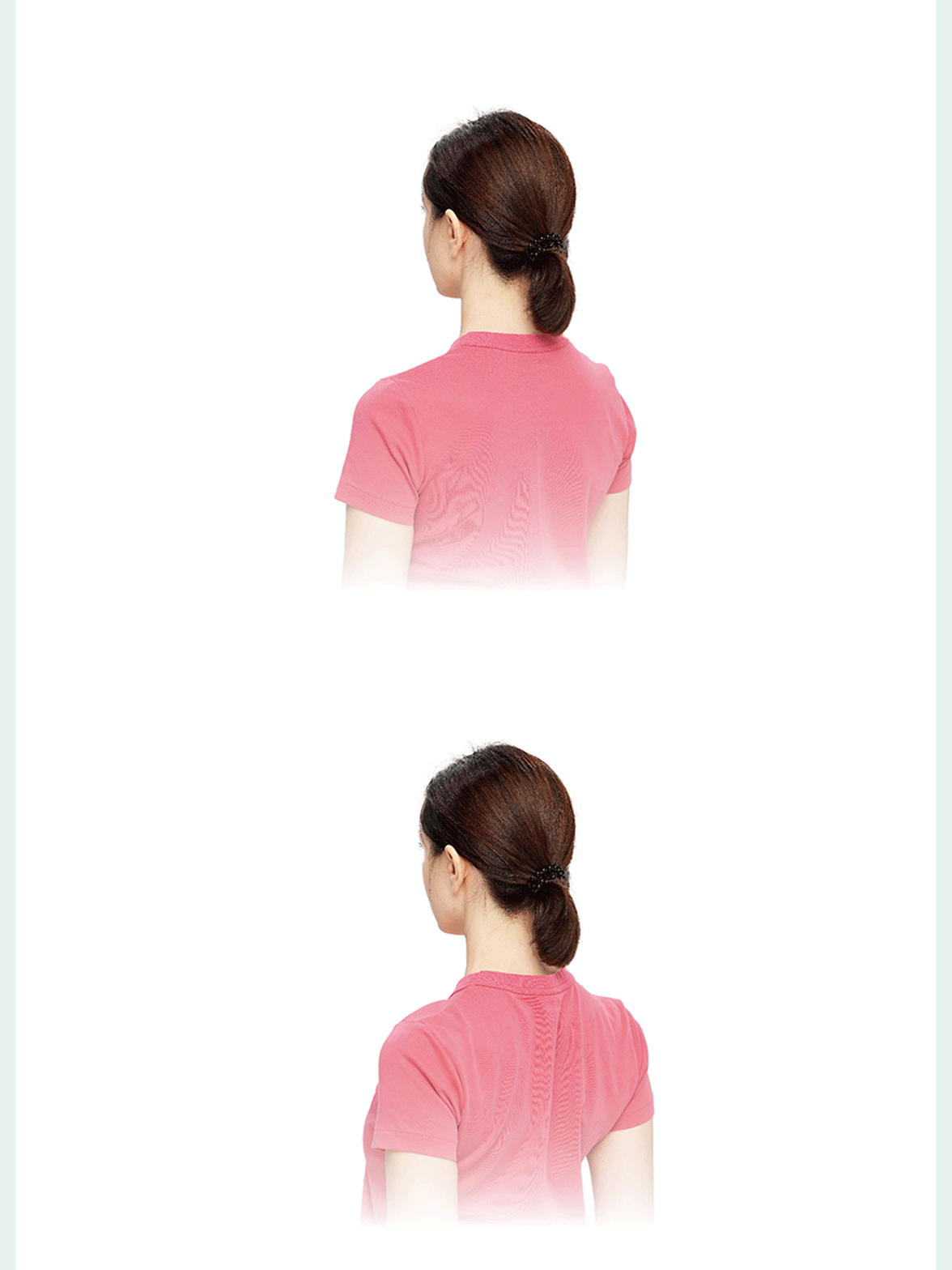
| Seated Scapular Retraction |
The seated scapular retraction exercise helps bring the shoulders out of forward slumping and back into normal alignment, decreasing the risk of impingement.
Step 1: Sit or stand in an upright position while keeping your head straight up. Keep your arms by your side the entire time.
Step 2: Slowly bring your shoulders straight back and squeeze your shoulder blades together while also pushing your shoulders down (scapular depression). Hold for three seconds.
Step 3: Slowly bring your shoulders back forward. Don’t jut your chin when you bring your shoulders back.
Step 4: Repeat this movement 12 times per set and perform three total sets. |
| Explore More Fitness |
|
|
Worth a Look
|
|
|
|
|
|
Contributed by Gan Jing World
|
|
|
Exercise Your Brain
|
|
|
|
|
|
|
|
|
|
The information in this newsletter is not intended to replace a one-on-one relationship with a qualified healthcare professional and is not intended as medical advice, diagnosis, or treatment. It is intended as a sharing of knowledge and information from the research and experience of many experts and journalists. The Epoch Times encourages you to make your own healthcare decisions based upon your research and in partnership with a qualified healthcare professional.
* When sharing an article, giftaccess@TheEpochTimes.com is added to the list of recipients. If your friend is not already a subscriber, we will send them a special link for free access to the article.
Our Rise & Shine newsletter is one of the best ways to receive vital health news and information. Manage your email preferences here or unsubscribe from Rise & Shine here. |
|
| Copyright © 2026 The Epoch Times, All rights reserved. |
|
| The Epoch Times. 129 West 29th Street, Fl 8, New York, NY 10001 | Contact Us |
|
|
 |

















0 Response to "Why 8 Hours of Sleep May Not Be Optimal"