Why did WWII soldiers carry bad-tasting chocolate?
 |
WWII soldiers carried emergency chocolate that tasted intentionally bad. |
World History |
 |
| |
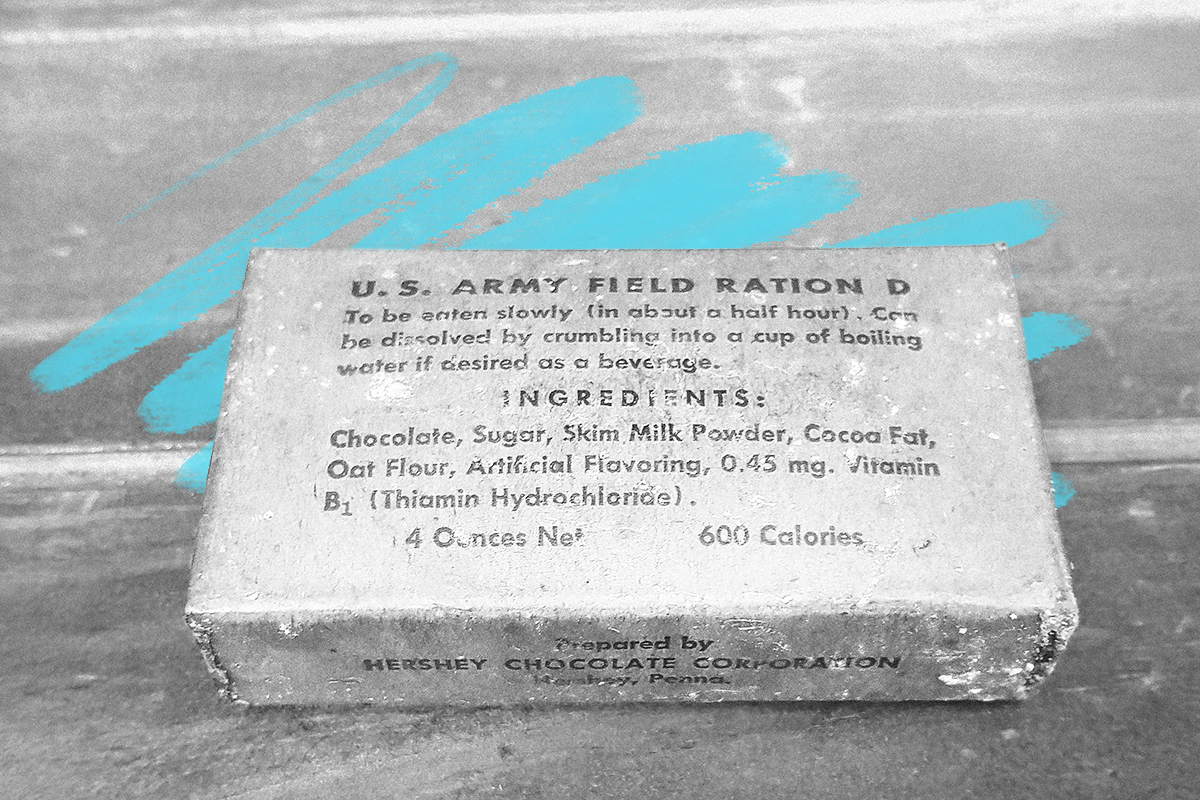
Following those instructions wasn't as simple as it sounds. Hershey chemist Sam Hinkle came up with a suitable formula of chocolate liquor, skim milk powder, cocoa butter, oat flour, vanillin, and barely enough sugar, but the resulting paste-like mix was too thick to be poured into molds and challenging to extract after setting. However, Hershey was eventually able to churn out 100,000 of what became known as "D ration" bars per day by 1939, and by the end of 1945, production for these and other military-designated chocolates was up to around 24 million units per week. | |
As for the order to ratchet up the unappetizing quotient, it's safe to designate this mission accomplished. The dense ration bars were difficult to bite into with their high melting point, and the lower sugar level meant taste buds were overwhelmed by the bitterness of dark chocolate. As a result, these unappealing bricks were typically saved for emergencies as intended, but there turned out to be an unforeseen use for them as well. With communities across war-torn Europe sometimes desperate for any kind of food, U.S. regiments found they could win over suspicious locals by handing out the chocolate rations. |


 | |||||||||
By the Numbers | |||||||||
| |||||||||
| |||||||||
| |||||||||
| |||||||||
Tootsie Rolls provided a lifeline for U.S. forces during a Korean War battle. | |||||||||
One of the memorable tales to emerge from the Korean War is that of the Battle of Chosin Reservoir, in which U.S. Marines found themselves surrounded by Chinese and North Korean forces amid frigid conditions in late 1950. As the story goes, the Marines radioed for help by requesting additional 60-millimeter mortars by their code name of "Tootsie Rolls," only to be surprised by an airdrop of actual Tootsie Roll candies. According to historian Todd DePastino, the botched communication story is likely apocryphal, but what is true is that Americans found boxes of Tootsie Rolls that had been stored in the area, originally meant to supply an Army base store. The candies not only provided a sugar boost for the fighters, but also were heated and used to plug holes in bullet-riddled cars and radiators, helping the "Chosin Few" survive this famously grueling battle. | |||||||||

| |||
Recommended Reading | |||
 | |||
Arts & Culture | |||
| |||
 | |||
World History | |||
| |||
| + Load more | |||
| |||||||||||||||||||||||||||||||||||||||||||||||||||||||









| |||||||||
| 325 North LaSalle Street, Suite 200, Chicago, IL 60654 | |||||||||

0 Response to "Why did WWII soldiers carry bad-tasting chocolate?"