The most elite M&M’s
 |
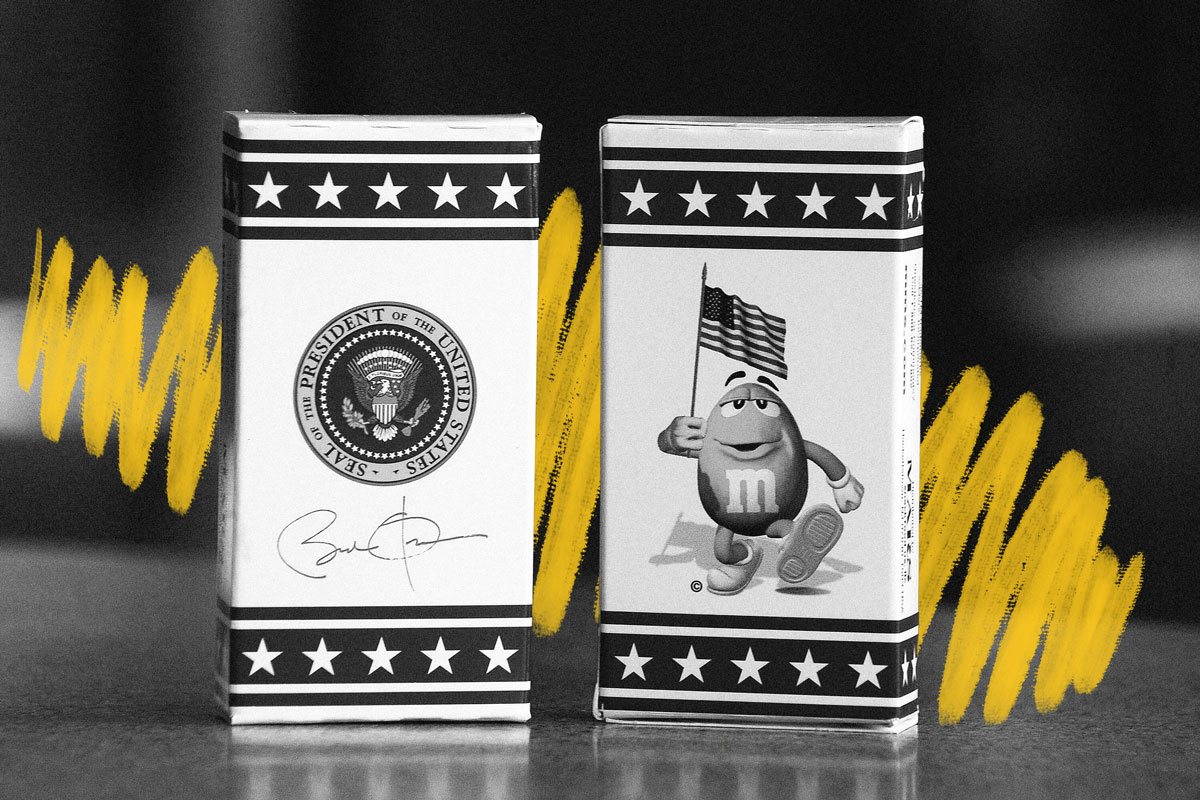
There are presidential M&M's that are given out to guests. |
U.S. History |
 |
| |
Ronald Reagan, a former smoker, switched to candy instead of cigarettes as part of the administration's "Just Say No" anti-drug campaign. He initially opted for jelly beans (which he loved), but also requested custom boxes of M&M's from Mars, Inc. in 1988. That year, First Lady Nancy Reagan saw the Moscow Summit as an opportunity to both ban smoking on Air Force One and use candy as a diplomatic tool. After arriving in the Russian capital, the first lady took boxes of M&M's off Air Force One and gave them to schoolchildren. They've remained a presidential gift ever since, with Bill Clinton being the first to add his signature to the box and offering peanut M&M's as an option. |
 |
These Are the Rolls-Royce of Hearing Aids (And Under $100) |
Shoppers are going nuts over these low-cost hearing aids that are virtually invisible. Discover how these affordable hearing aids are changing the lives of people everyday. |
*This content is brought to you by our sponsor, which helps keep our content free. |
 | |||||||||
By the Numbers | |||||||||
| |||||||||
| |||||||||
| |||||||||
| |||||||||
M&M's were the first candy in space. | |||||||||
The 1980s were a big decade for M&M's. In addition to being chosen as an official presidential candy, they also became the first candy in space when astronauts brought the "candy-coated chocolates" (as NASA labels them) aboard the Space Shuttle Columbia on April 12, 1981. They were chosen not just for taste but also for practical reasons: M&M's are eaten whole, meaning they won't leave crumbs that can float through zero gravity and get lodged in the crevices of important instruments; they're also harder to lose due to their bright colors. "When you're talking about a chocolate bar that you have to bite or break, a piece could fly off," space historian Jennifer Levasseur explained on the Smithsonian's National Air and Space Museum website. "Anything you can eat in daily life that could leave crumbs behind is potentially bad news for the spacecraft." | |||||||||

| |||
Recommended Reading | |||
 | |||
U.S. History | |||
| |||
 | |||
Arts & Culture | |||
| |||
| + Load more | |||
A 1-Minute Trick for a Squeaky Clean Shower |
Busy folks are obsessed with this cleaning hack. Drop one X-All tablet in water, spray your shower, wait 2 minutes, and rinse. That's it. No scrubbing. No harsh fumes. Just sparkling clean tiles, glass, and grout. |
*This content is brought to you by our sponsor, which helps keep our content free. |
| |||||||||||||||||||||||||||||||||||||||||||||||||||||||









| |||||||||
| 325 North LaSalle Street, Suite 200, Chicago, IL 60654 | |||||||||

0 Response to "The most elite M&M’s"